

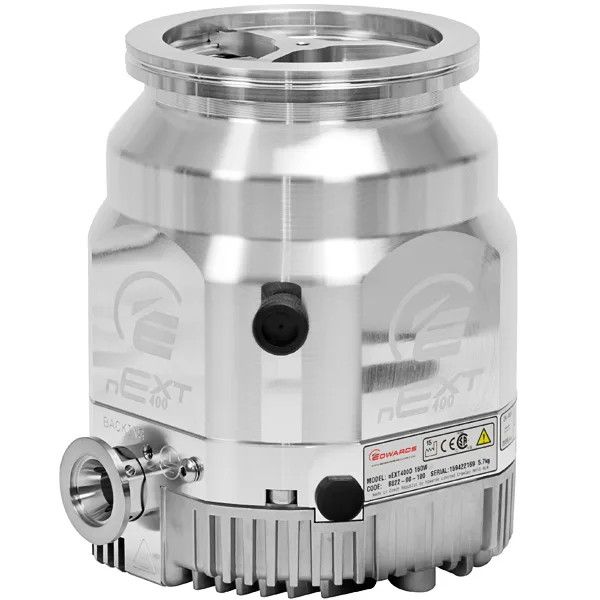


In the industrial sector, vacuum pumps are often the “forgotten” workhorses, until they fail. For over 40 years, Girovac has assisted businesses across the UK in maintaining, repairing, and optimising their vacuum systems. Since 1983, we have observed a recurring pattern: most operational inefficiencies and premature pump failures are not caused by the equipment itself, but by common maintenance and operational errors.
In an era of rising energy prices and stringent production deadlines, these mistakes do more than just shorten the lifespan of your rotary vane vacuum pump; they directly impact your bottom line. Below are seven of the most frequent mistakes we encounter and, more importantly, how you can rectify them to improve energy efficiency and system reliability.
1. Incorrect Sizing: The “Bigger is Better” Fallacy
One of the most significant contributors to wasted energy is over-specification. We frequently see systems equipped with pumps that are far larger than the application requires. While a larger pump might reach the desired vacuum level faster, it consumes significantly more power and operates less efficiently during the sustained “hold” phase of your process.
Conversely, an undersized pump will struggle to maintain the required vacuum, leading to extended cycle times and overheating.
The Solution: Proper system design is essential. Before purchasing new equipment, ensure you have calculated the required flow rate and ultimate vacuum precisely for your application. As we discussed in our previous post on over-specifying vacuum pumps, getting the sizing right is the first step toward a cost-effective operation.

2. Neglecting Oil Quality and Regular Changes
For an oil-lubricated rotary vane vacuum pump, the oil is its lifeblood. It provides lubrication, cooling, and the critical seal between the vanes and the pump chamber. Over time, this oil becomes contaminated with process vapours, dust, and chemical residues.
Operating a pump with degraded or contaminated oil increases internal friction and forces the motor to draw more current to overcome the resistance. In extreme cases, contaminated oil can lead to “sludging,” which can permanently damage internal components.
The Solution:
- Implement a strict oil-change schedule based on operating hours or oil colour.
- Use the correct grade of vacuum oil (generic equivalents can offer significant cost savings if specified correctly).
- Monitor for “milky” oil, which indicates water contamination, and use gas ballast valves where appropriate to purge vapours.
3. Ignoring System Leaks
A vacuum system is only as efficient as its tightest seal. Even a microscopic leak in your piping or at a flange joint forces the pump to work harder to maintain the target pressure. If your pump is running at 100% capacity just to compensate for atmospheric air leaking into the system, you are essentially throwing energy away.
Leaks often develop over time due to vibration, thermal expansion, or the degradation of old O-rings and gaskets.
The Solution: Regular leak detection is vital. Utilise ultrasonic leak detectors or pressure decay tests to identify weak points in your system. Replacing a £10 O-ring could save you hundreds of pounds in annual energy costs.

4. Using the Wrong Filtration or Spares
To protect your pump from process contaminants, high-quality filtration is non-negotiable. However, using the wrong filter, or neglecting to change an existing one, creates a restriction in the inlet line. This restriction forces the pump to work against higher resistance, leading to increased energy consumption and reduced pumping speed.
Furthermore, many operators believe they must always purchase expensive branded spares.
The Solution: While we are proud UK distributors for MIL’S French-engineered systems, Girovac also maintains an extensive stock of high-quality generic spares for major brands like Leybold, Edwards, and Busch. Our generic spares provide the same technical reliability as OEM parts but at a more competitive price point, allowing you to maintain your equipment without compromising your maintenance budget.
5. Lack of Professional Servicing
While daily checks can be performed in-house, there is no substitute for a professional teardown and inspection. Many businesses wait until a pump has seized before seeking help. By this stage, the repair costs are often triple what a preventative service would have been.
A professional service identifies “hidden” issues, such as worn vanes that have not yet shattered, or cooling fans that are partially obstructed by workshop debris.
The Solution: Our North Walsham workshop is equipped to handle everything from minor repairs to full reconditioning of complex vacuum systems. By sending your pump to our engineers, you ensure that every clearance and tolerance is checked against the manufacturer’s specifications. (Note: Repair lead times may vary based on the availability of specific internal components for older models).

6. Environmental Factors: Heat and Dust
Vacuum pumps are sensitive to their surroundings. In many facilities, pumps are tucked away in corners or small enclosures where heat can build up. Since a pump’s efficiency drops as its temperature rises, poor ventilation is a silent energy killer.
Similarly, dust and airborne particles can clog the cooling fins on the motor or the pump body, leading to overheating and premature bearing failure.
The Solution: Ensure your pumps are located in a well-ventilated area with at least 30cm of clearance on all sides. Regular cleaning of the external surfaces and cooling fans with compressed air can significantly extend the life of the motor and internal seals.
7. Skipping Preventative Maintenance (PM)
The “if it isn’t broken, don’t fix it” mentality is the most expensive strategy in the vacuum industry. Preventative maintenance is about identifying the gradual decline in performance before it reaches a failure point.
A pump that is slowly losing its ultimate vacuum capability is a pump that is becoming more expensive to run every day.
The Solution: Develop a PM checklist that includes:
- Inlet filter inspection and cleaning.
- Exhaust filter (oil mist separator) checks to prevent back-pressure.
- Checking belt tension (for belt-driven models).
- Logging operating temperatures and ultimate vacuum levels weekly to spot trends.
The Girovac Approach: 40 Years of Expertise
At Girovac, we take a “total solution” approach to industrial vacuum. Whether you are looking for a brand-new MIL’S high-vacuum system or need a reliable reconditioned unit to get your production line back up and running, we have the technical expertise to assist.
Our partnership with MIL’S, a company with over a century of French engineering history, allows us to provide industry-leading pumps that are designed with energy efficiency and “eco-design” at their core. However, we also recognise the value of legacy equipment. Our workshop regularly services and supplies reconditioned models from brands like Edwards, PFEIFFER, and BUSCH, often providing 6-month warranties on our reconditioned stock (subject to correct installation and use).
Ready to Optimise Your System?
Don’t let maintenance mistakes drain your budget. If you are unsure whether your current vacuum system is operating at peak efficiency, or if you need expert advice on the best spares for your rotary vane pump, our team is here to help.
For technical enquiries or to book a service at our workshop, please email us at [email protected]. With over four decades of experience, no task is too small or too large for the Girovac team.
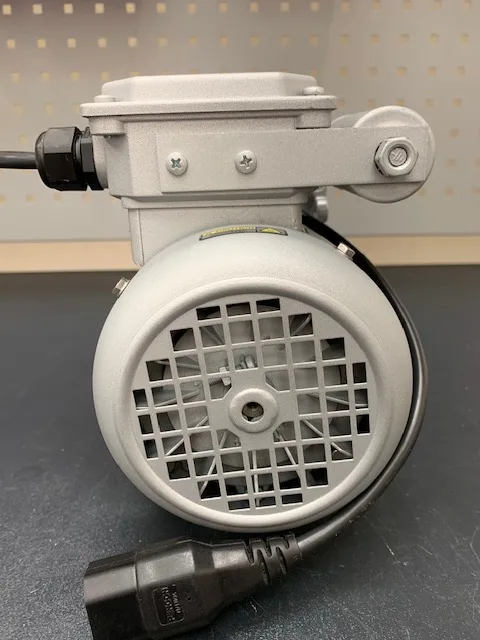

Selecting the correct vacuum pump for an industrial or laboratory application is a decision that impacts long-term operational costs, maintenance schedules, and system reliability. Since 1983, Girovac has specialised in medium and high vacuum equipment, providing expert advice to facility managers and maintenance engineers across the UK.
A frequent question we encounter is how modern, engineered solutions like the MIL’S EVISA range compare to “traditional” rotary vane pumps. Girovac has over 40 years of vacuum expertise (since 1983), and we have been the UK distributor for MIL’S since 1996, so we have had nearly 30 years to see first-hand how French engineering can turn a standard technology into a very capable industrial asset. This article provides a technical comparison to help you decide which path is right for your specific requirements.
Understanding the Industry Baseline: Traditional Rotary Vane Pumps
For decades, the oil-lubricated rotary vane pump has been the workhorse of the vacuum industry. Its design is relatively simple: a rotor is positioned eccentrically in a cylindrical housing, with vanes that slide in and out of slots, creating chambers of varying volumes. This positive displacement mechanism is highly effective for achieving deep vacuum levels (often down to 10⁻³ mbar in two-stage models).
Traditional pumps, such as those from legacy European brands like Edwards or Leybold, are robust and dependable. They are the “standard” for a reason, they work. However, standard designs often require external accessories to handle specific industrial challenges, such as oil mist elimination or high-temperature operation. While these pumps are excellent for general-purpose use, they can sometimes fall short in demanding continuous-duty cycles or environments where noise and vibration are critical factors.
The MIL’S EVISA: Re-Engineering a Classic
The MIL’S EVISA series represents an evolution of the rotary vane principle. Manufactured in France, these pumps are not just a different brand; they are a re-engineered approach to lubricated vacuum technology. While they utilise the same core physics as traditional pumps, the EVISA range integrates features that are often considered “optional extras” elsewhere into the standard build.
1. Superior Efficiency and Continuous Operation
One of the primary technical advantages of the EVISA range is its ability to operate continuously from atmospheric pressure down to its ultimate vacuum in the 10⁻¹ to 10⁻² mbar range (down to 0.06 mbar on some current models). Many traditional rotary vane pumps struggle with continuous operation at higher pressures, which can lead to overheating or excessive oil carryover.
The EVISA is designed with a more robust thermal management system. This ensures that the pump maintains its performance even in high-ambient-temperature environments or during prolonged pumping cycles. For facility managers, this translates to fewer unplanned shutdowns and a more reliable vacuum supply for critical processes like freeze drying or degassing.
2. Integrated Oil Mist Filtration
In some traditional setups, particularly with older legacy pumps or budget generic models, the exhaust from a rotary vane pump may require an external oil mist filter to prevent oil vapours from entering the workspace. If these filters are not correctly sized or maintained, they can create backpressure, reducing the pump’s efficiency.
The MIL’S EVISA features an integrated, high-efficiency oil mist filter within the pump housing. This design ensures that the captured oil is returned directly to the lubrication circuit. This not only results in a cleaner working environment (essential for laboratory and healthcare settings) but also reduces oil consumption over time.

3. Noise and Vibration Mitigation
Noise pollution is a significant concern in modern manufacturing and research facilities. Traditional pumps can be notoriously loud, requiring expensive acoustic enclosures.
The EVISA range is specifically engineered for “silent” operation. Through precise balancing of the rotor assembly and high-quality French manufacturing tolerances, these pumps exhibit significantly lower vibration levels than many generic or older-generation rotary vane models. This makes them ideal for installation in locations where staff are working in close proximity to the equipment.
Technical Comparison at a Glance
To provide a clear overview, the table below highlights the key differences between a standard industry-baseline pump and the MIL’S EVISA:
| Feature | Traditional Rotary Vane | MIL’S EVISA |
|---|---|---|
| Manufacturing | Various (often global sourcing) | French Engineered & Manufactured |
| Filtration | Often external/optional | Integrated high-efficiency |
| Operation | Intermittent high-pressure | Continuous atmospheric to ultimate |
| Noise Level | Standard (often requires enclosure) | Low-noise design as standard |
| Maintenance | Frequent oil checks/external filter changes | Simplified onsite servicing |
| Reliability | Good (standard) | Extremely high (heavy-duty design) |
Maintenance and the “Total Solution” Approach
At Girovac, we emphasize the importance of maintenance in the total cost of ownership. A “cheap” pump can quickly become expensive if spares are difficult to source or if the design requires specialized tools for simple tasks.
The MIL’S EVISA is designed with the maintenance engineer in mind. The layout of the pump allows for “light onsite maintenance,” meaning common service tasks can be performed quickly without removing the pump from the system. This is a crucial advantage for facility managers looking to minimise downtime.

Furthermore, as the UK distributor for MIL’S since 1996, Girovac maintains a comprehensive stock of genuine MIL’S spares and consumables at our North Walsham workshop. We also provide cost-saving generic alternatives for standard components where appropriate, ensuring our customers always have a choice that fits their budget. Our 40+ years of vacuum expertise mean that if you encounter a technical issue, you aren’t calling a generic helpdesk; you are speaking to engineers who have been servicing these systems for decades.
Choosing the Right Equipment for Your Facility
While the MIL’S EVISA offers numerous advantages, the “better” pump always depends on the specific application.
- Choose a Traditional Rotary Vane if: Your application is intermittent, your budget is highly constrained for initial purchase, and you have the space for external filtration and acoustic management.
- Choose a MIL’S EVISA if: You require 24/7 reliability, you operate in a noise-sensitive environment, or you want a compact, integrated solution with lower long-term maintenance requirements.
Girovac provides a “total solution” approach. We don’t just sell you a pump; we help design the system, select the correct valves and measuring instruments, and provide ongoing support. Whether you need a small MIL’S pump for a laboratory freeze dryer or a large-scale industrial vacuum system, our team can provide the technical guidance necessary to make an informed decision.

Conclusion: Expertise You Can Trust
The transition from a standard vacuum pump to a high-performance MIL’S EVISA unit is often a turning point for many of our customers. The combination of French engineering and Girovac’s local UK support provides a level of security that is hard to match.
With over four decades of experience in the vacuum industry since 1983, we have seen technologies come and go. Our commitment to brands like MIL’S is based on their proven performance in the field, and our partnership as UK distributor since 1996 gives us a long, practical view of how these pumps perform outside the brochure. If you are looking to upgrade your current vacuum equipment or are designing a new system from scratch, we invite you to draw on our experience.
For expert advice on MIL’S EVISA pumps, or to discuss our range of reconditioned vacuum pumps (which include 6-month warranties for added peace of mind), please get in touch.
Contact Girovac Today:
- Email: [email protected]
- Visit: www.girovac.com
No task is too small or too large: from a single O-ring to a bespoke industrial system, we are here to support your vacuum requirements.
As Girovac moves into its fifth decade of operation, we remain proud of our legacy – and excited about what’s ahead.
Girovac and MIL’S: A Partnership Built on Quality, Trust, and Innovation
At Girovac, we’re proud to continue our longstanding partnership with MIL’S – a company whose dedication to precision, reliability, and craftsmanship aligns perfectly with our own values.
In November 2018 Girovac delivered another INDUSVAC 2E100 H5 Central Vacuum System for installation in a London University Chemistry Laboratory.
MIL’S is about to announce the launch of New Vacuum Products in Spring 2019. Stay in touch to read about it first on our website.
Girovac have been chosen by Rolls Royce to supply a bespoke vacuum system for their engine maintenance schedule.