Choosing a two-stage rotary vane vacuum pump
Compare pumping speed and ultimate pressure alongside vapour handling, gas ballast, electrical supply and maintenance access. For laboratory equipment or a backing-pump replacement, the connected instrument’s requirements are as important as the pump specification. Confirm the oil and any inlet or exhaust accessories required.
Frequently asked questions
What is the difference between single-stage and two-stage rotary vane pumps?
Two-stage oil-sealed rotary vane pumps use two pumping stages and generally achieve a lower ultimate pressure than comparable single-stage designs. That does not make them the best choice for every duty. Compare the operating pressure, capacity and process requirements of the particular models.
What does gas ballast do?
Gas ballast introduces gas during compression to help limit condensation of vapours inside an oil-sealed pump. It has operating limits and affects the attainable pressure. Follow the pump instructions for its use; it does not make a pump suitable for every solvent or vapour.
Can a two-stage rotary vane pump back a turbomolecular pump?
It can, where the model meets the turbomolecular pump’s backing requirements and the process is compatible. Check throughput, allowable backing pressure and contamination requirements. Send the turbo and backing pump references when discussing a replacement.
How do I choose the correct rotary vane pump oil?
Start with the exact pump model and the manufacturer’s oil specification. Include the current oil reference and details of gases or vapours being pumped. Do not choose a substitute by viscosity alone or mix fluids without confirming compatibility.
Related equipment and guidance
Compare single-stage oil-filled pumps · Vacuum pump oil guide · Pump repairs and servicing
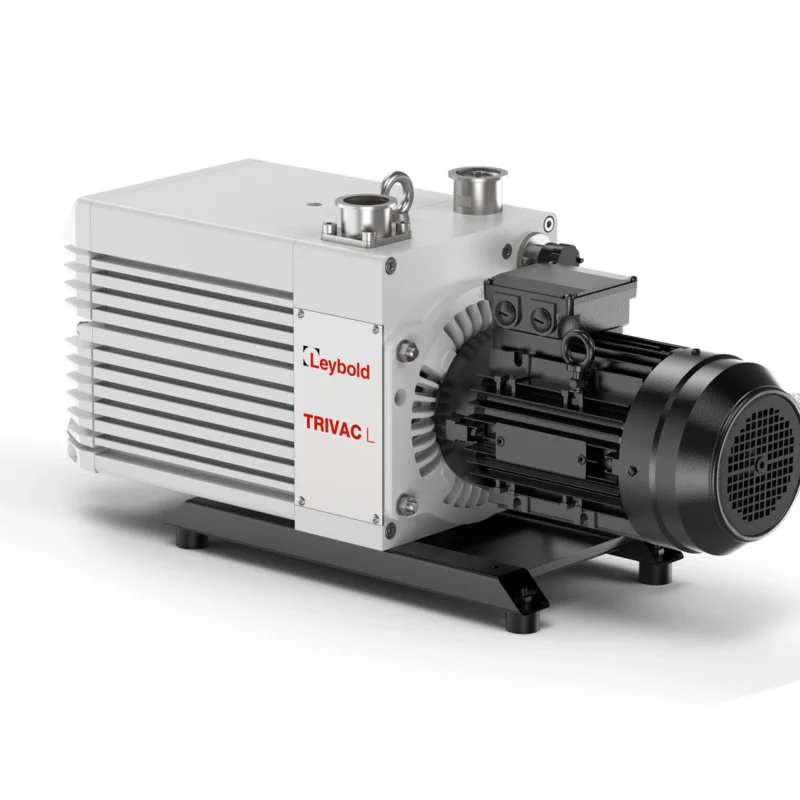
Leybold TRIVAC L
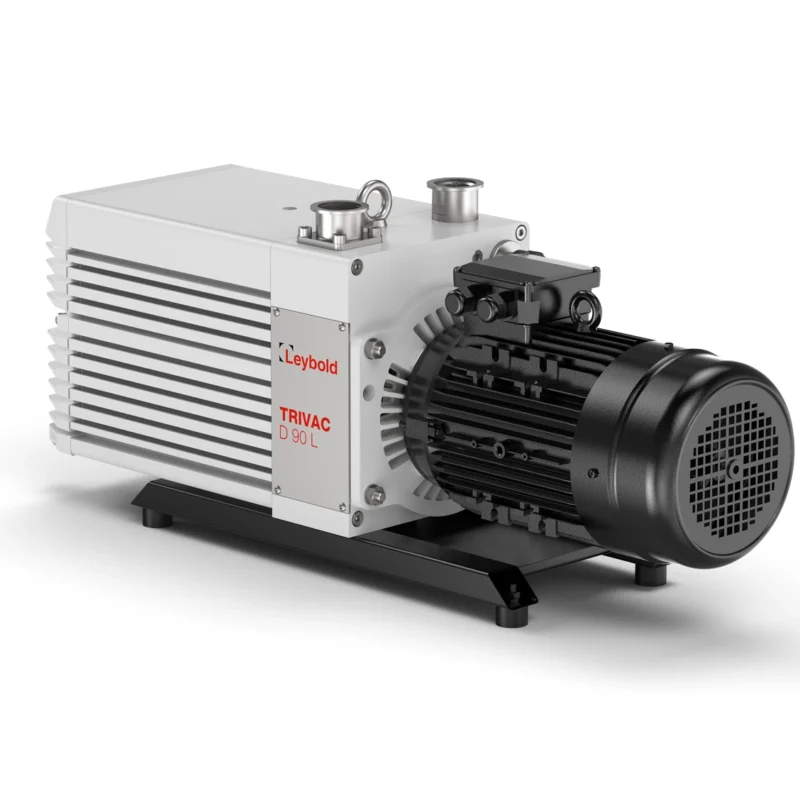
Compare the TRIVAC D 40 L, D 63 L and D 90 L for three-phase oil-sealed roughing and backing. Actual pumping speeds at 50 Hz are 42, 60 and 79 m³/h respectively; these differ from nominal displacement. Check the motor supply, oil, gas ballast and exhaust accessories on each model page.
Leybold NEO D
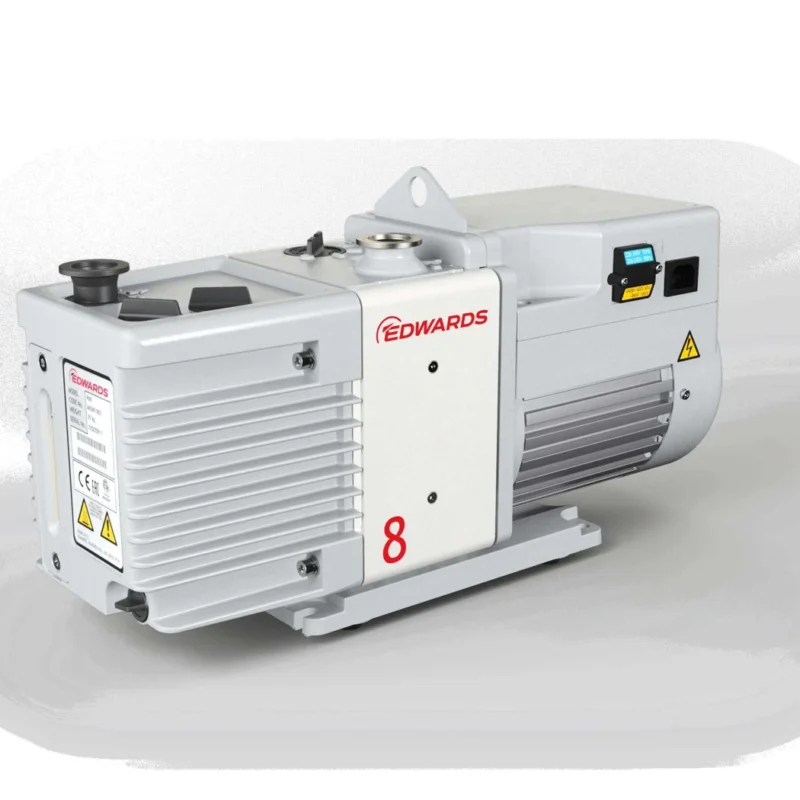
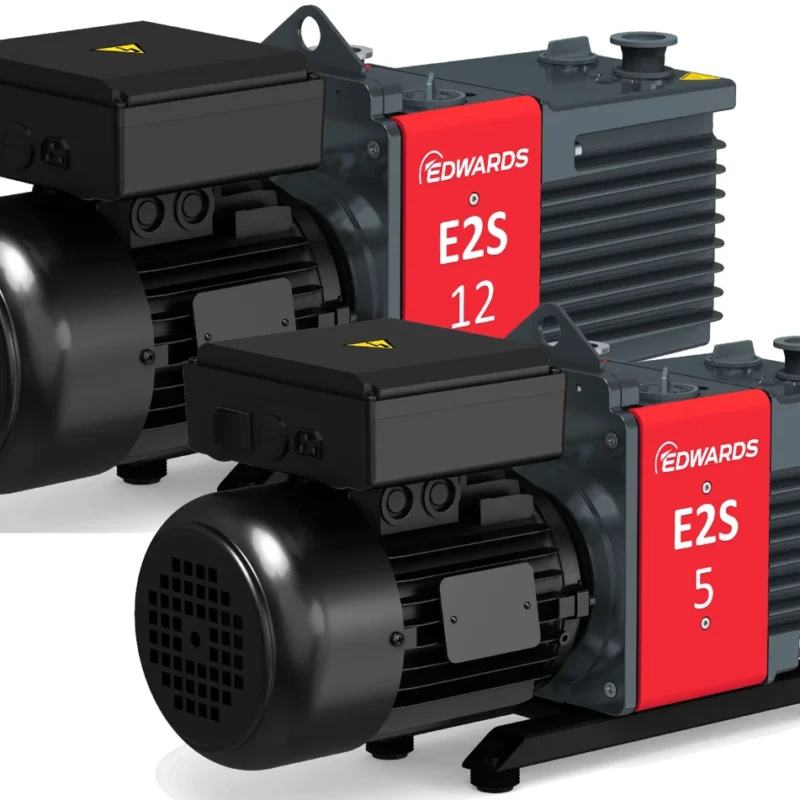
For two-stage oil-sealed pumping with integrated exhaust oil-mist filtration, compare the NEO D 16, 25, 40 and 65 family. Use actual pumping speed, motor supply, oil and gas-ballast conditions when selecting a model.Edwards model familiesCompare new Edwards RV3, RV5, RV8 and RV12 pumps and Edwards E2S5 and E2S12 pumps. Reconditioned equipment is identified separately on its product pages.