

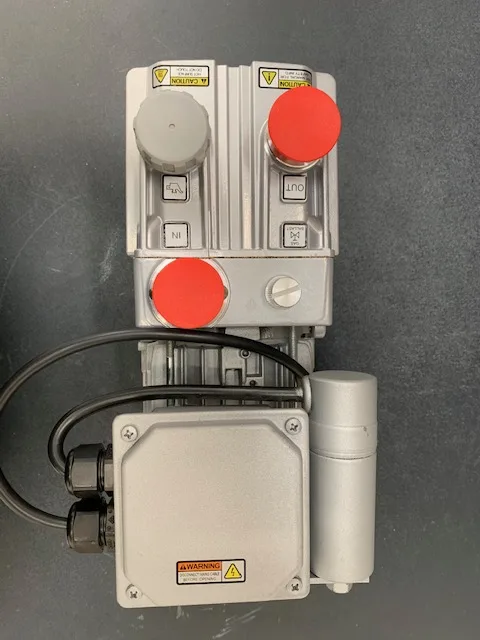
A vacuum pump that has become noisy is usually telling you something. The common causes are low or contaminated oil, worn bearings, worn or sticking vanes, a sticking anti-suck-back valve, cavitation from an air leak, or loose mountings. The type of noise — rattle, knock, whine or gurgle — points to the cause.
1. Low or contaminated oil
On an oil-sealed pump, a rattling or knocking noise on start-up often means the oil is low, old or contaminated. Check the sight glass and, if the oil is dark or cloudy, change it. This is the first and cheapest thing to check.
2. Worn bearings
A continuous whine, growl or rumble that rises with running usually indicates worn motor or pump bearings. Bearings are a wear part and are replaced during a service.
3. Worn or sticking vanes
A knocking or tapping noise can come from worn vanes or vanes sticking in the rotor slots, often alongside a loss of vacuum. This is a workshop repair.
4. Anti-suck-back valve
A clatter on shut-down can be the anti-suck-back (inlet) valve sticking or worn. It’s a straightforward part to replace.
5. Cavitation from a leak
A gurgling or fluttering noise can be caused by an air leak or the pump running against a large leak — find and fix the leak (see why a pump won’t reach ultimate vacuum).
6. Loose mountings or coupling
A vibration or buzzing that changes when you touch the pump is often just loose feet, a loose guard or a worn drive coupling — quick to check and tighten.
Pump making an unusual noise?
Send us the make, model and a description (or a short video) and we’ll tell you what’s likely wrong and whether it needs a workshop repair. Email [email protected] or request a quote.
Frequently asked questions
Why has my vacuum pump suddenly got louder?
The most common cause is low, old or contaminated oil – check the sight glass first. Persistent whining or rumbling usually means worn bearings, while knocking can be worn vanes; both need a service.
Is a noisy vacuum pump dangerous?
A new or worsening noise means something is wearing or failing, and running on can turn a small repair into major damage. Investigate promptly – start with the oil, then have it inspected.
Can a noisy vacuum pump be repaired?
Usually, yes. Worn bearings, vanes, valves and couplings are standard wear parts replaced during a service or reconditioning, which restores quiet running and full vacuum.
Written by the Girovac technical team. Girovac Ltd has supplied and serviced industrial and laboratory vacuum equipment from its North Walsham workshop since 1983. Last updated: July 2026.